Your target audience isn't limited to a single channel.
A content strategy often starts with the question: Which channels should we be on? That makes sense, but that question actually comes too early. The more important question is: Who do we want to reach, and what do we actually know about their media habits?
Assumptions limit your reach
General assumptions about target audiences and platforms are hard to shake: Young people are on TikTok. Professionals are on LinkedIn. Facebook is for older generations. But as soon as you take a closer look at the numbers, the reality turns out to be a lot less black and white.
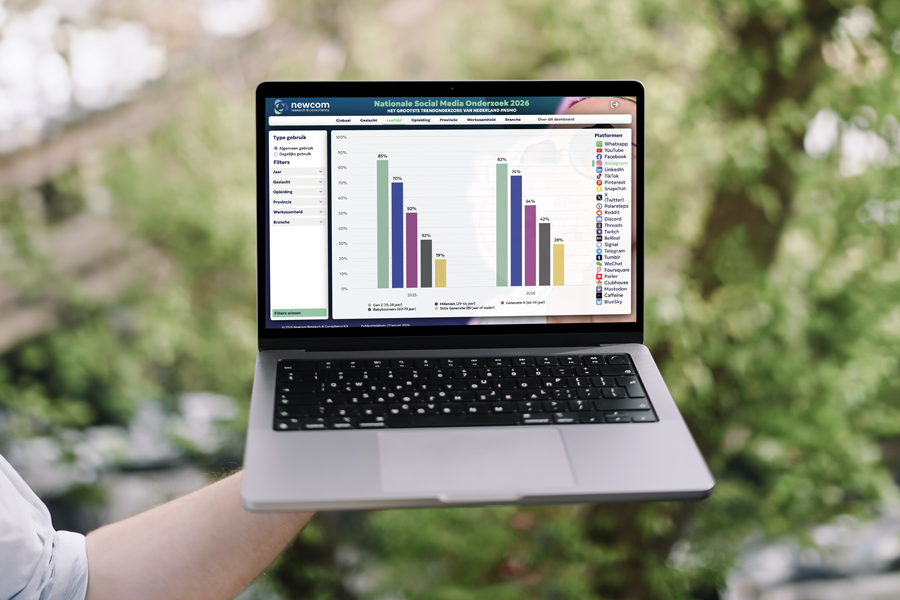
Our perceptions of social media don’t always align with actual usage, as the 2026 National Social Media Survey shows. Facebook is often seen as a platform for older generations, yet in 2026, 77% of millennials actually use the platform. Instagram is strongly associated with young people, but usage among baby boomers grew from 32% in 2025 to 42% in 2026. And TikTok? At 71%, it remains particularly popular among Gen Z, but 42% of millennials now use the platform as well.
This shows just how risky it is to base a channel strategy on assumptions. A target audience is rarely found on just one platform, and a platform rarely has just one target audience. By taking a closer look at age, region, education, and other characteristics, you not only get a better picture of where people can be reached, but you can also think much more strategically about how to engage them there.

From Reach to Relevance
The latter is just as important. Knowing that your target audience is on Instagram doesn’t tell you what kind of content works there. And knowing that millennials spend a lot of time on Facebook doesn’t automatically mean that every message belongs there. A good understanding of your target audience therefore helps not only with channel selection, but also with decisions regarding tone of voice, content format, topic, and timing. Perhaps the same target audience seeks in-depth information on LinkedIn , inspiration on Instagram , and practical information on Facebook . So the question isn’t just: Where is my target audience? But above all: What do people expect from the channel you’re using to reach them?
More data doesn't necessarily mean more channels or more content—in fact, it's quite the opposite. The better you understand who you want to reach, the better you can determine where you should—and shouldn't—be present, which target audiences you need to approach separately, and where a single generic message simply isn't relevant enough.
In our recent campaign for GGD Twente, we also used this type of target audience insight to more effectively justify our choices regarding channels and content. After all, a wide reach isn’t much use if your message doesn’t resonate with the people you’re trying to reach. The better you understand your audience, the more precisely you can tailor what you say, where you say it, and how you say it.
