NIMA Marketing Day 2026: Why Brands Can Feel Again
To keep challenging ourselves and stay up to date on the latest trends and developments in marketing, Kelly, Jeroen, Miriam, Raymond, and Laureth attended the NIMA Marketing Day 2026. After all, if you want to stay at the forefront of your field, you have to keep learning, listening, and finding inspiration. Interestingly, many of the keynotes, case studies, and panel discussions ultimately revolved around the same question:
"How do you make people feel a connection to your brand?"
Because even though we have more data, technology, and marketing tools at our disposal than ever before, standing out seems to be getting harder. Products are becoming increasingly similar. So are services. Campaigns are created faster, and content is produced more quickly. But attention? That remains scarce. And perhaps that’s exactly why so many presentations reached the same conclusion: behind every proposal, investment, or tender, there’s ultimately a person. A person who seeks trust, weighs risks, and makes choices based on more than just facts. During the NIMA Marketing Day 2026, it became clear once again just how significant that human factor actually is.
The Pitfall of Measurability
One of the most recurring themes of the day was the balance between brand and demand. For years, marketers have learned to make everything measurable through performance marketing. Clicks, leads, conversions, and ROI became the holy grail. And rightly so, because measurement provides insight.
Still, a problem arises when everything revolves around what’s immediately visible. Not every purchasing decision starts with an ad. Not everyone’s brand preference is formed online. A conversation at the coffee machine, a recommendation from a coworker, or a comment made during a meeting are hard to capture in dashboards.
That’s exactly why brand-building remains important. Performance ensures that people find you. Brand-building ensures that people choose you.
B2B also makes choices based on intuition
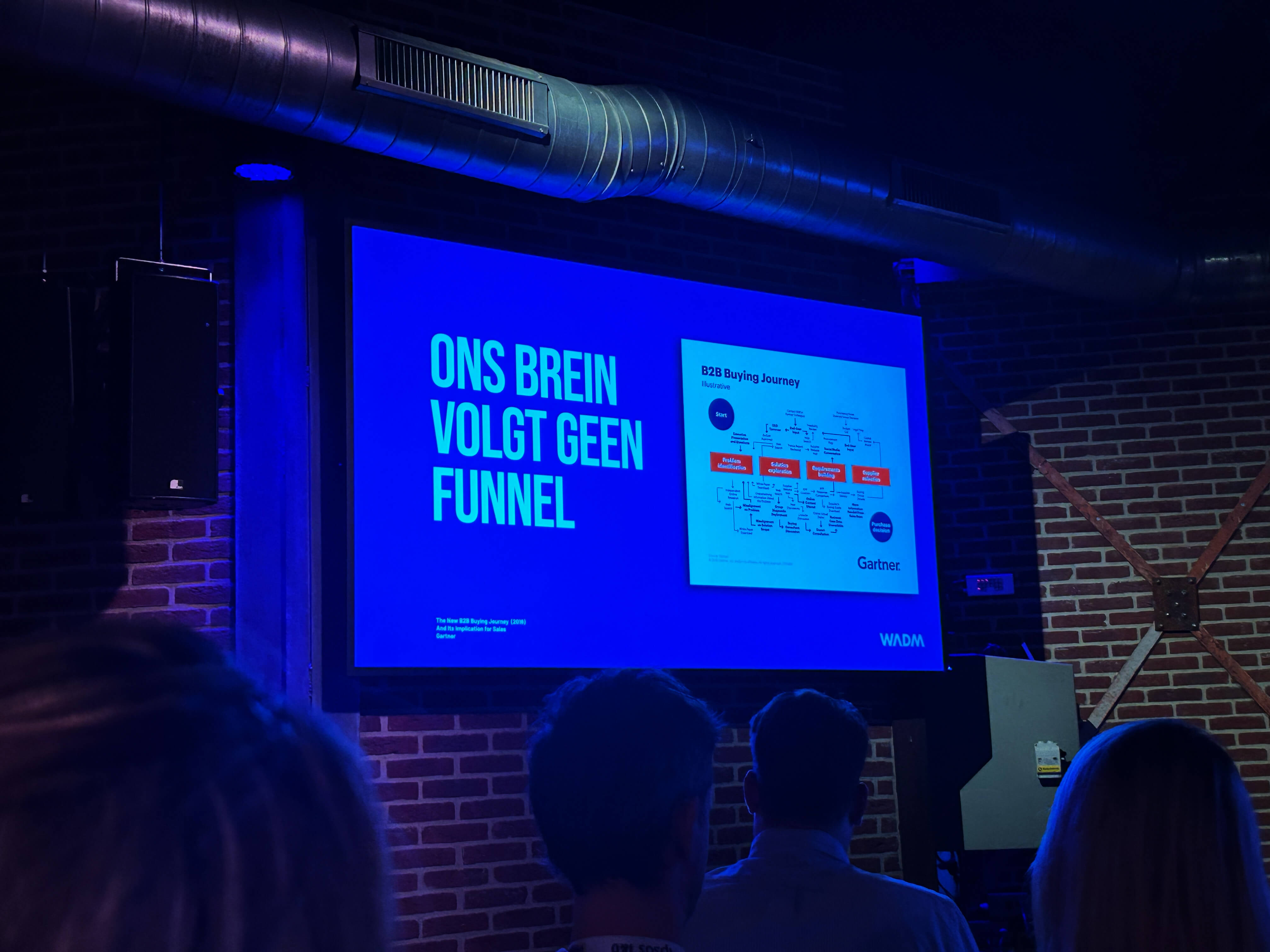
Perhaps the most striking insight of the day was how often emotion came up in a business context. B2B marketing is still often approached as if decisions were made entirely rationally—as if a business buyer simply compared the best specifications with the lowest price and then made an objective choice. The reality turns out to be a lot more human.
During several sessions, the same mechanism was mentioned: business decision-makers are primarily concerned with avoiding making the wrong choice. Trust plays a bigger role in this than many organizations realize. Or, as one speaker aptly summarized:
"The brain analyzes. The heart sets the course."
Brand experience: from telling to proving
Another notable development was the growing focus on brand experience. More and more organizations are realizing that brand experience doesn’t start with a campaign, but with the actual experience customers have.
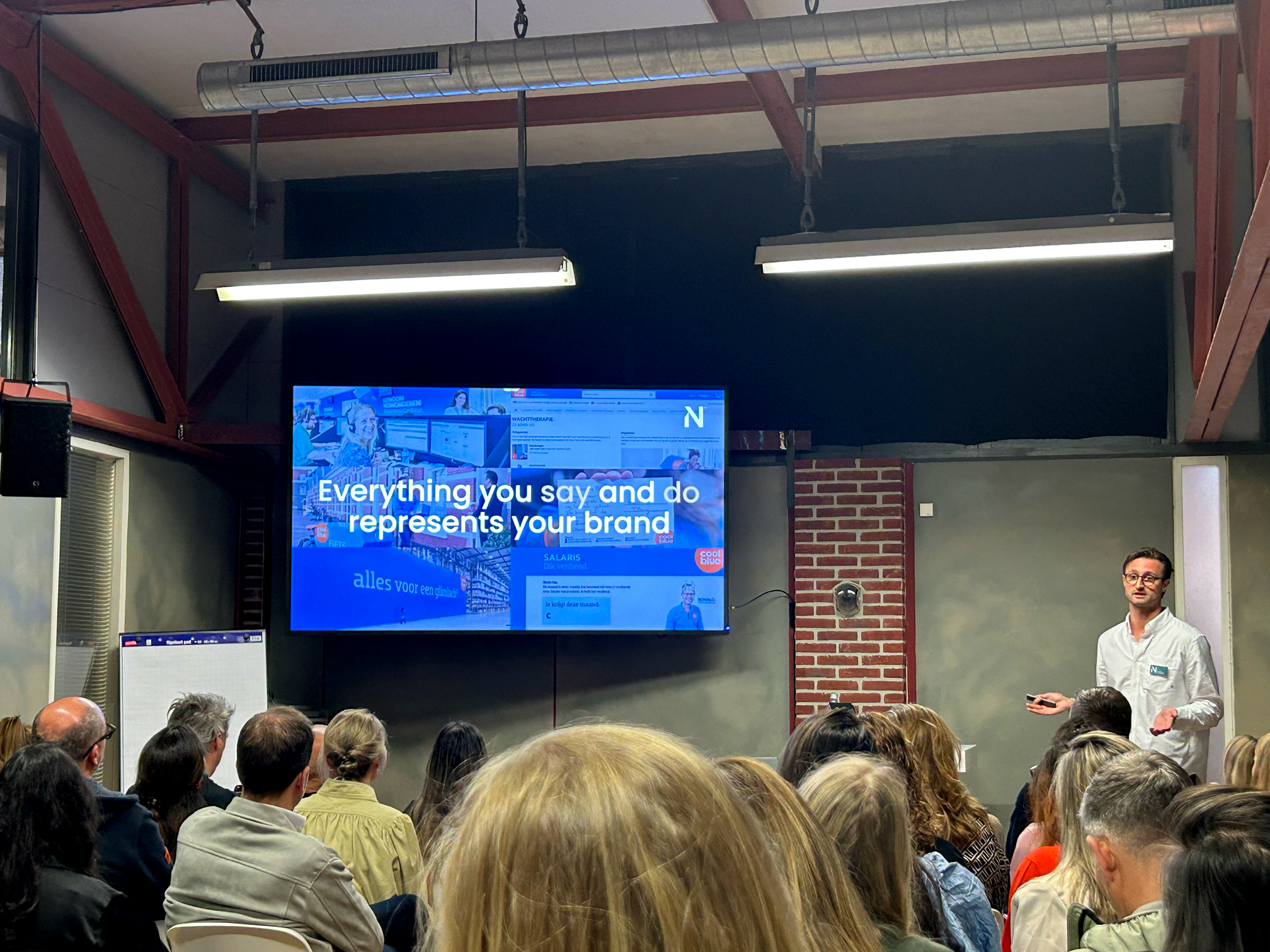
Coolblue was, of course, mentioned several times as the prime example of brand experience in practice. Not because of their advertising, but because of everything that happens afterward. The videos, service, communication, and the anticipation after placing an order all come together to form the brand. What stood out is that Coolblue also explicitly involves its own employees in that brand experience. After all, they are the ones who deliver on the brand promise to customers every day. That’s why even a pay stub is fully designed in line with Coolblue’s branding and tone of voice. An interesting thought that was shared: if you were to remove the logo from a quote, email, or pay stub, would you still immediately recognize which brand it came from? It is precisely in that consistent experience—for both customers and employees—that the power of a strong brand lies.
Patagonia is another great example of this. Their well-known message about sustainability resonates not because they say it, but because they live by it. Have a broken jacket? They’ll help you repair it, instead of selling you a new one. That’s what makes a brand credible. And credibility is becoming increasingly valuable.
"Performance helps people find you. Brand-building helps people choose you."
- Peter Field, "the godfather of effectiveness"
The Real Challenge for Marketers
What we took away from this day is that marketing is less and less about pushing harder. The challenge lies elsewhere. In a world where AI can create AI , ads are automatically optimized, and technology is becoming increasingly accessible, differentiation no longer comes from what you say. It comes from what people experience. From building trust. From sparking something. From being relevant at moments you can’t always measure.
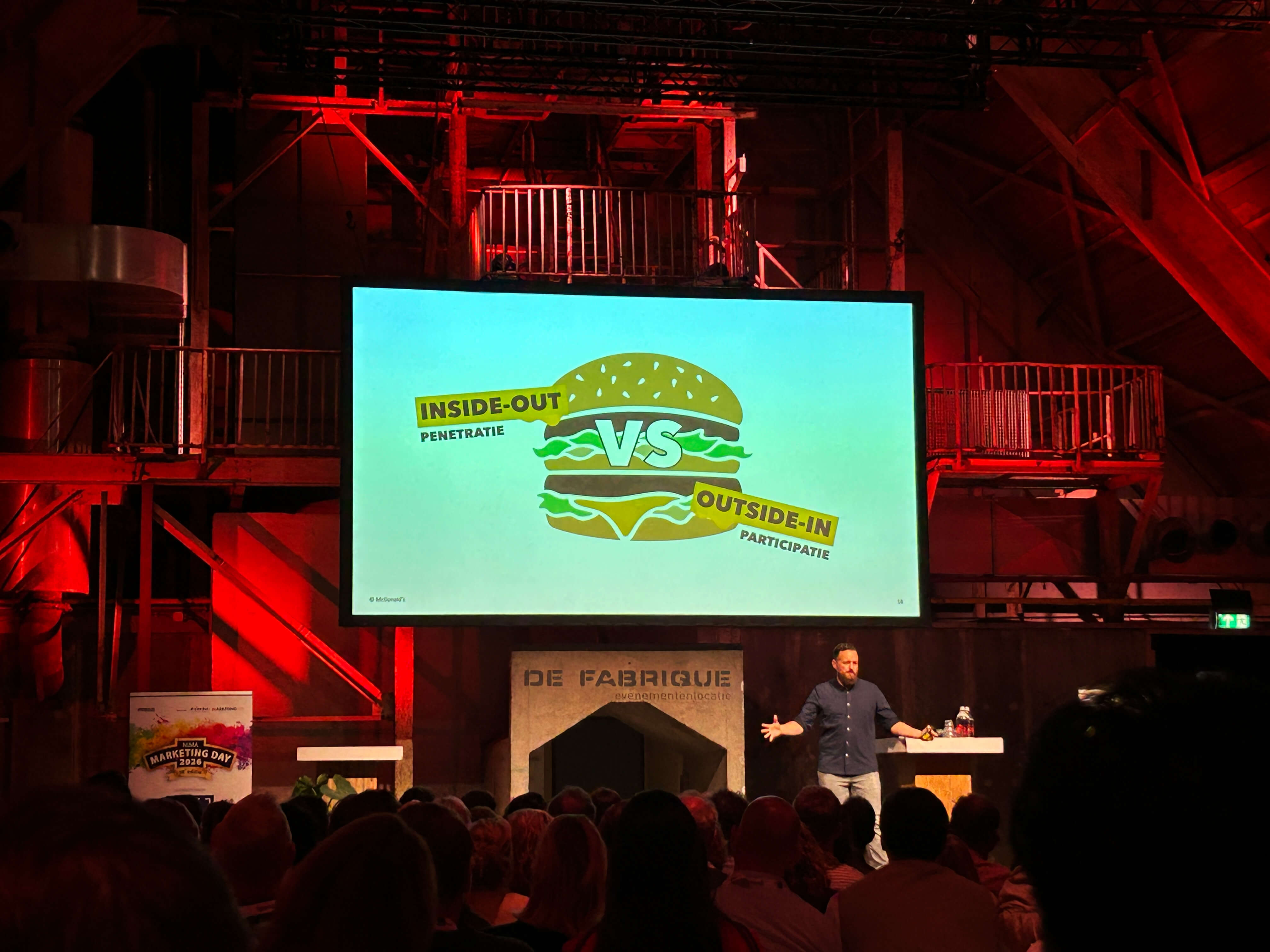
But how do you do that? By listening carefully to your target audience and acting on what you hear. McDonald’s does this in an inspiring way, by incorporating suggestions from followers into their social media strategy. So they don’t just think from the brand’s perspective, but from the perspective of the people who use the brand. From “inside-out” to “outside-in,” as they put it.

How do you make sure that people
Do you feel a connection to your brand?
Kelly - Senior Project Manager
Want to bounce some ideas off each other about brand building, performance, or brand experience?
Give us a call, send us an email, or stop by to say hello.
Why Trust Is Becoming Increasingly Important
One insight that stuck with us was the term FOMU: Fear Of Messing Up. Business decision-makers are often not afraid of things going wrong, but of making the wrong choice. That’s why they don’t always opt for the cheapest or technically best solution, but for the brand that exudes trust. That trust doesn’t come about on its own. During one of the sessions, brand experience was described as consistently delivering on your brand promise and exceeding expectations—not by communicating more aggressively, but by creating experiences that people remember.
That raises an important question: Do you know what your brand stands for? And more importantly: Do customers and employees actually experience that as well? So the question isn’t just how visible your brand is. The question is what it evokes. Because in a world full of stimuli, attention is valuable, but meaning is priceless.
