Visit to We Are Playgrounds
A Day Among Creators
Sometimes you need to step outside your own world for a moment to get a clearer perspective on what you’re doing. Not because you’re missing anything, but because you’re so immersed in it every day. That’s why the entire Motion team recently visited the
We Are Playgrounds-event in Eindhoven. A day filled with creators, stories, and creative processes, where it became clear once again that it’s rarely just about the end result, but rather about everything that comes before it.
Concept \ Creation \ Storytelling \ Motion design \ 3D visualization \ Animation \ Visual identity \ Creative direction \ Composition \ Rhythm & timing \ Iteration \ Visual language \ Concept \ Creation \ Storytelling \ Motion design \ 3D visualization \ Animation \ Visual identity \ Creative direction \ Composition \ Rhythm & timing \ Iteration \ Visual language
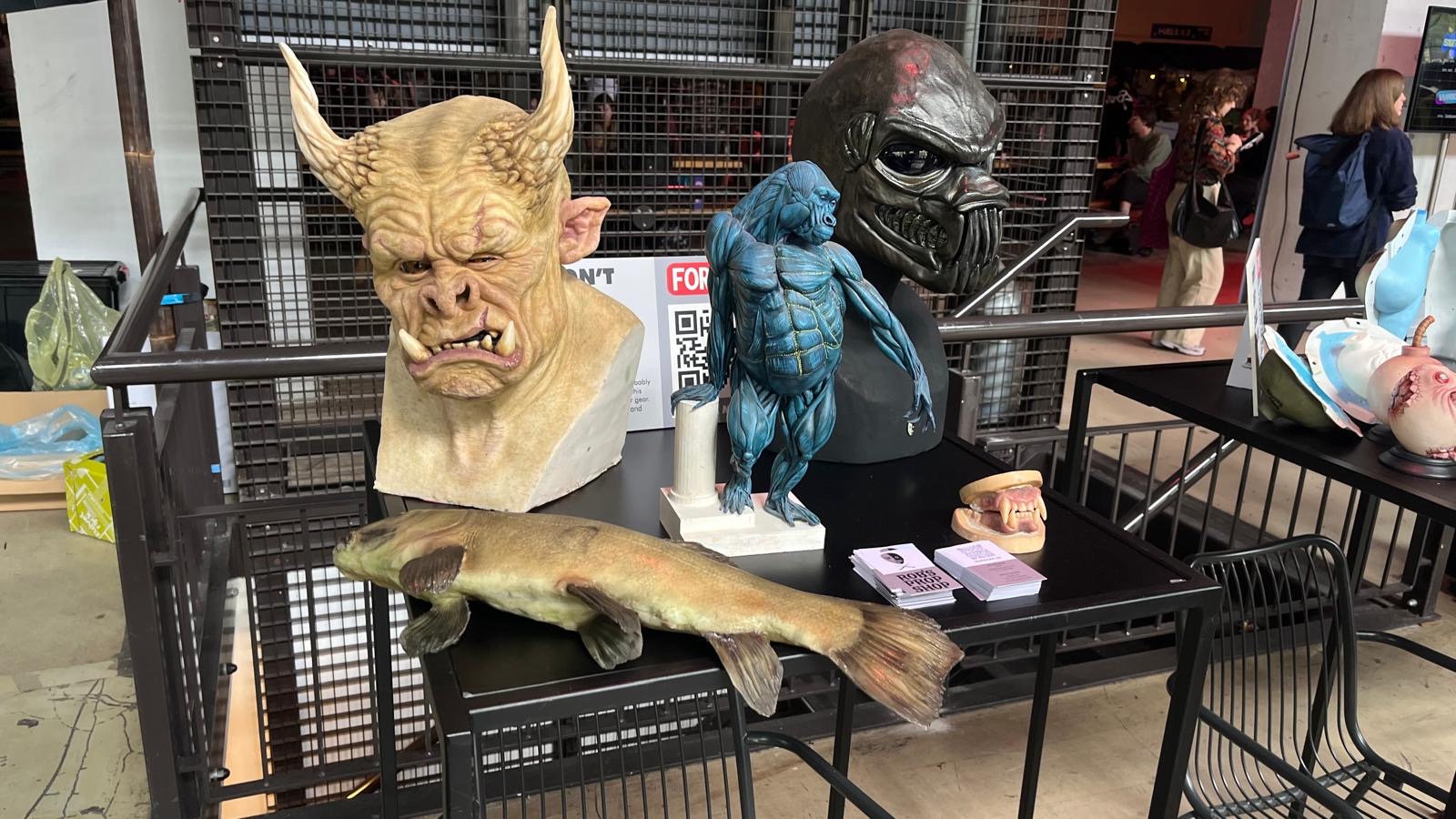
What goes on behind the scenes of the films and animations that you usually only see as finished products? That’s what Playgrounds’ The Art Department focuses on. In Eindhoven, creators come together to showcase their work, but above all to offer insight into how they create it.
After a delayed train ride, we arrived a little later than planned, but we quickly made up for lost time with some great experiences. What immediately stands out is that presentations here aren’t just about the final results, but about the whole process. Sketches, drafts, and experiments are discussed just as seriously as the final image.
Throughout the various sessions, it becomes clear just how diverse each creator’s approach is. From illustrators to animation studios, everyone works differently, but always with a clear vision.
While some start with quick sketches and intuitive choices, others work within a tightly structured system. Those differences are what make it interesting. It shows that there isn’t just one way to create strong work, but that choices and direction are ultimately what matter.
Building worlds before they come to life
A recurring theme is just how important the visual foundation is before animation can even begin. Concept artists and designers spend a great deal of time developing environments, atmosphere, and visual logic.
You can see that foundation, for example, in work where the use of color and composition already tell a story without anything moving. Only then do we consider animation, timing, and interaction.
Key takeaways:
- Worlds are first designed visually before they are animated
- Color and composition influence how a scene is interpreted
- Consistency in style fosters recognition and credibility
- The animation builds on what has already been established visually
You don’t just see that kind of choice in big-budget film productions. In shorter videos and animations, too, this structure ultimately determines how impactful a story comes across. It’s precisely that layer that makes all the difference.
Style is always evolving
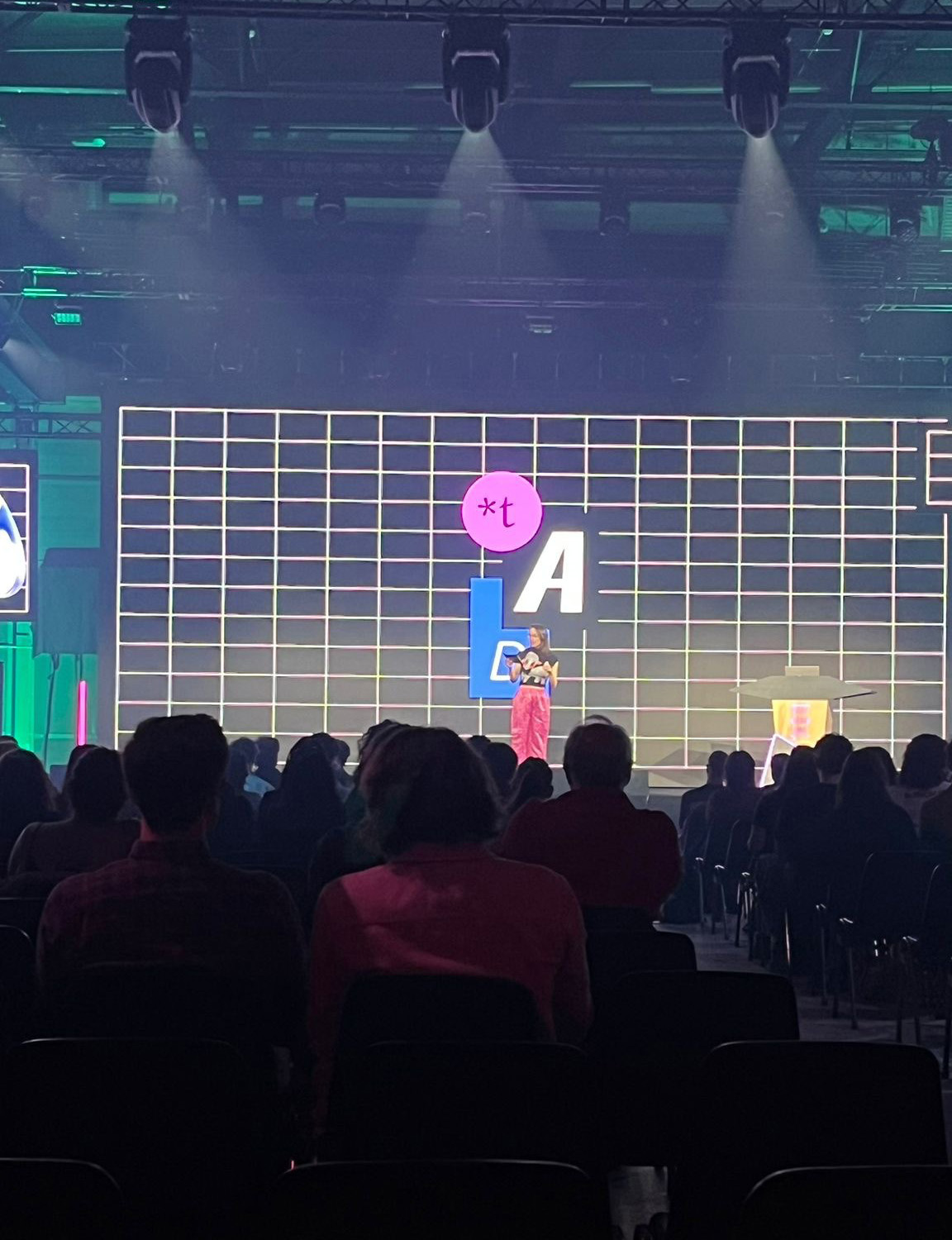
In addition to major studios, individual creators also demonstrated how they develop their own visual style. And that rarely happens overnight. It comes about through experimentation, combining techniques, and constantly deciding what works and what doesn’t.
This is evident, for example, in projects where multiple artists collaborate on a single video, each with their own distinct style and approach. If the video is successful, it still feels cohesive and consistent as a whole, because there were clear creative guidelines that everyone followed.
References also play an important role in this process. Creators look at existing work, draw elements from it, and then translate those elements into something of their own. Not to copy, but to use that inspiration to forge a new direction.
What stood out most in that was:
- Style often emerges from combining different techniques
- References serve as a source of inspiration, but are translated into our own visual language
- Collaboration among creators can lead to surprising new styles and perspectives
For us, it reaffirmed that style is never truly “finished,” but continues to evolve through new influences, experiments, and collaborations.

Need a sparring session? Of course that is always possible
Susanne - Editor
Pick up the phone or email us.
What does it take to make a production compelling?
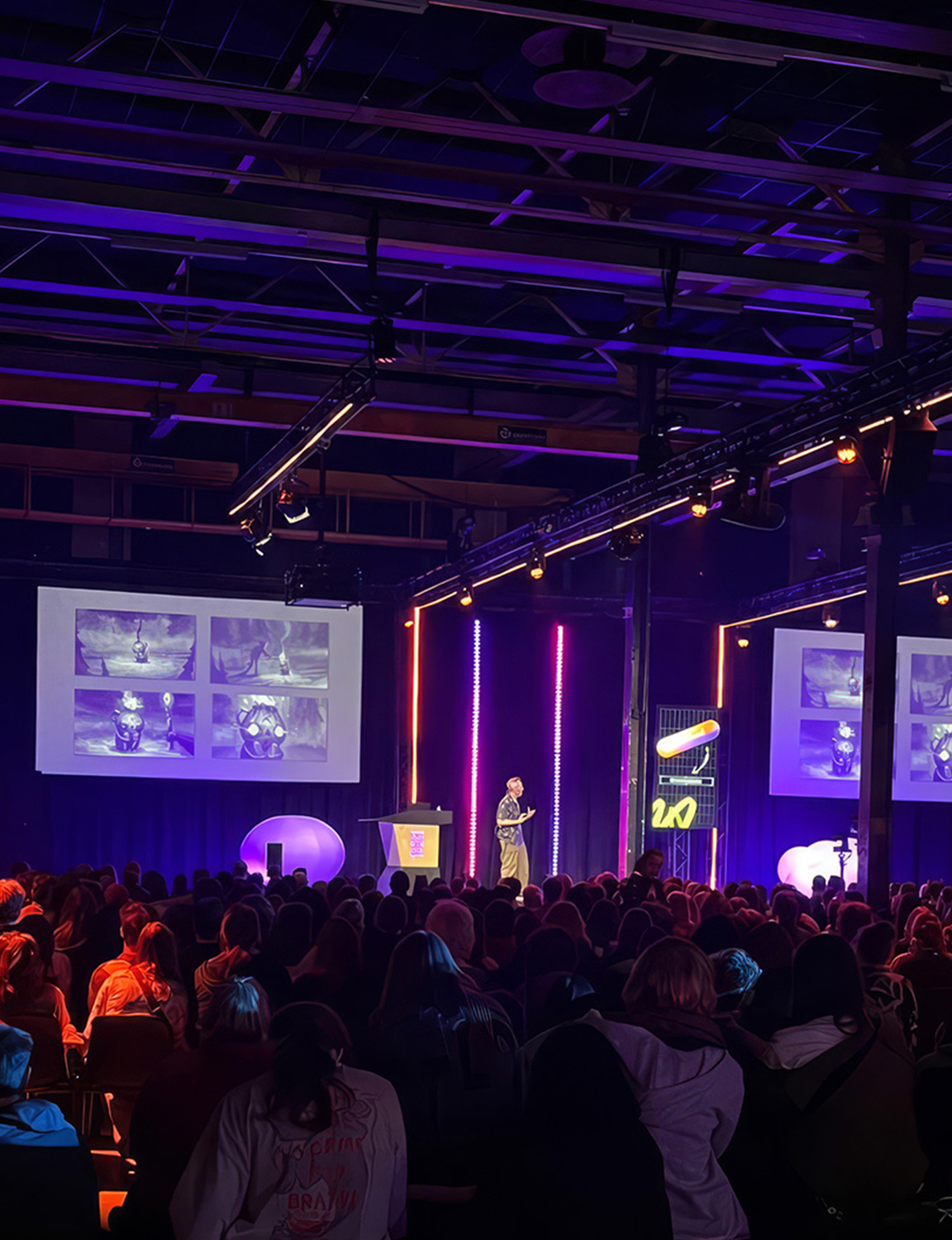
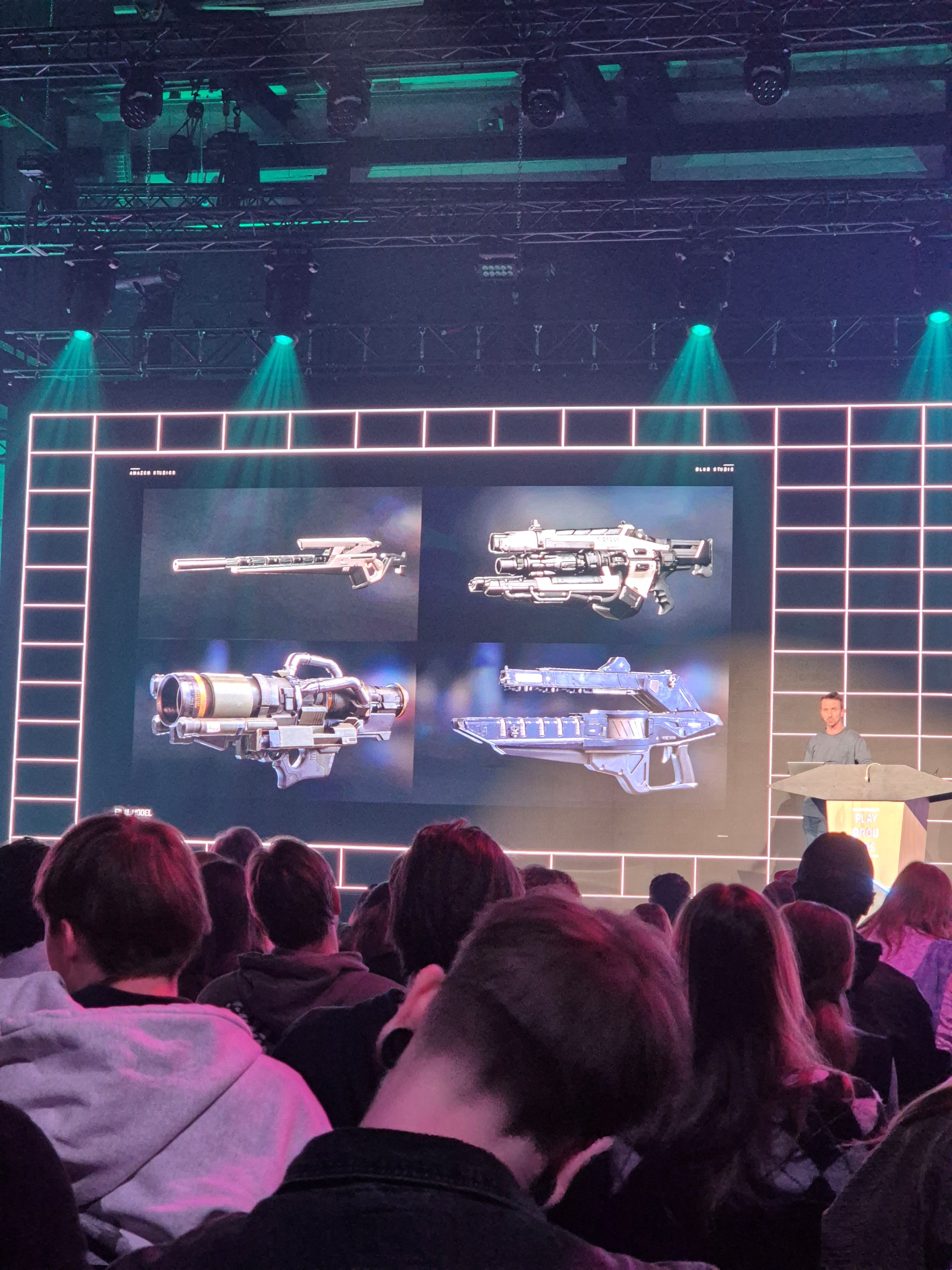
During Blur Studios’ presentation, it became clear what goes into larger-scale productions. For their episode ofSecret Level, they spent two years working on a 15-minute film, built entirely in Unreal Engine. What stands out most is the number of decisions that must be made before anything is finalized. Characters are developed in dozens of variations, and environments are also tweaked multiple times before they feel right.
In addition, they provided insight into the pipeline: how assets are built, how different teams collaborate, and how everything ultimately comes together in a single production. Coordination and precision are essential to creating a consistent world.
A few familiar conclusions:
- Major productions are the result of many small decisions
- Iterations are necessary to arrive at the right form
- Behind every image lies extensive preparation
It shows that conviction comes from attention to detail, not just from scale or budget.
Technology and creativity evolve hand in hand
As several creators demonstrated, technique is not a separate element but directly influences how something looks and feels. Rather than first developing an idea and then choosing a technique, both evolve simultaneously.
This is evident in projects where 2D and 3D are not used as separate disciplines, but are instead combined. For example, redrawing over existing animations creates a dynamic that cannot be achieved using a single technique.
So how something is made is just as important as what is made!
What a day like this adds to your perspective
Not everything you see is directly relevant to your own work. And it doesn’t have to be. What this day gives us most of all—besides team-building, of course—is inspiration! Gaining insight into how others work, how decisions are made, and how projects are structured offers us new perspectives on our own work.
And that is precisely what influences how you approach projects yourself, from the initial idea to the final execution. Not to copy, but to gain a clearer understanding of the possibilities in our work.
